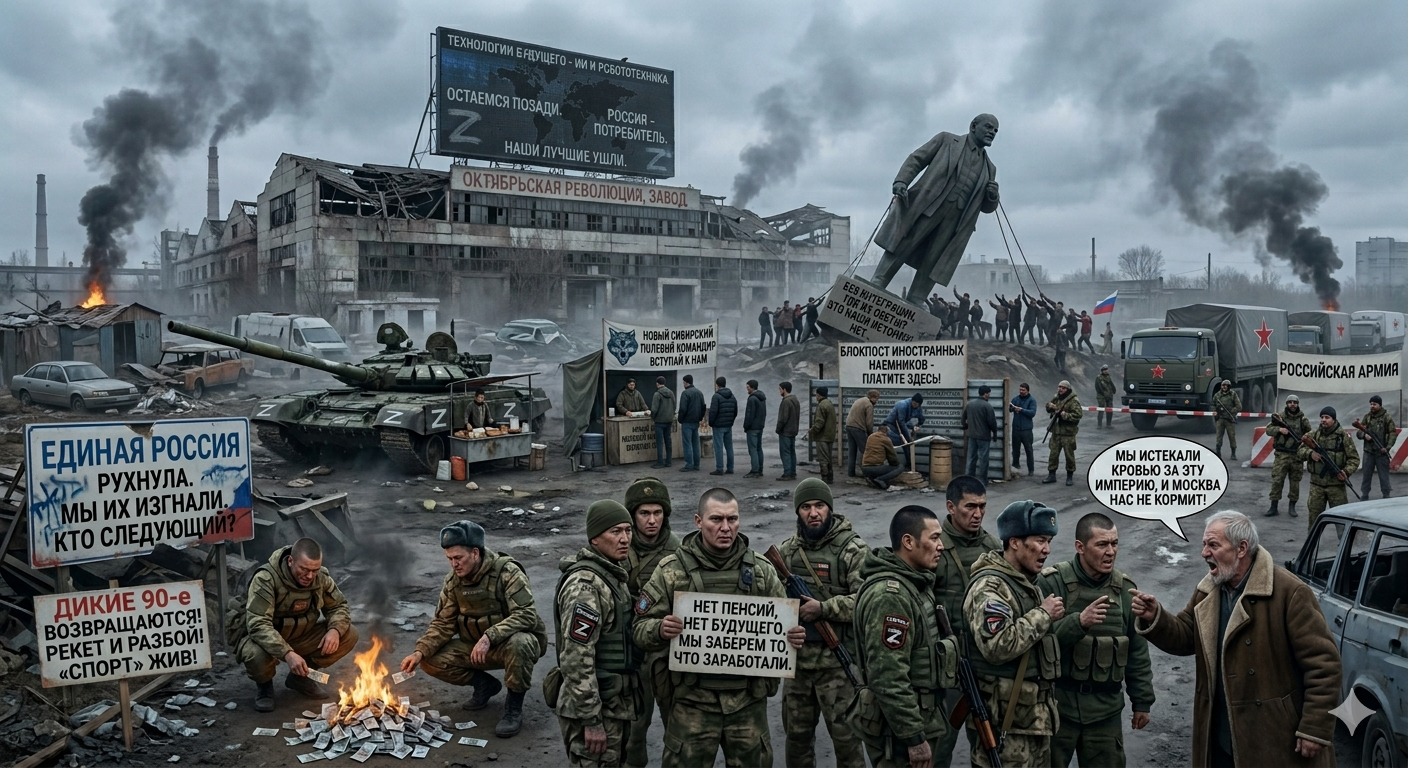
1. Technological Backwardness While the world’s leading powers race ahead in artificial intelligence and robotics, Russia is falling further behind. AI is rapidly becoming the “brain” behind millions of devices, autonomous systems, and robots that will reshape economies, militaries, and societies. These breakthroughs have accelerated dramatically in recent years — precisely the period Russia has been consumed by war.
Developing competitive AI and robotics requires enormous capital investment and deep existing technological expertise. Russia possesses neither. Even if the war ended today, it would take years — and resources Russia no longer has — to catch up. Instead of becoming a producer of these technologies, Russia will remain a consumer, stuck at the level of a developing country in this critical domain.
The war has drained Russia’s financial reserves, while many of its best engineers and developers have emigrated. The technological gap with the West (and even with China) will only widen.
2. The Demobilization Crisis Whether Russia wins or loses, the war will eventually end, and more than a million soldiers will return from the front lines. These men have grown accustomed to unusually high salaries paid by the state. Once demobilized, they will face a harsh reality: civilian life offers far lower pay and requires skills many of them never developed.
What professions will they pursue? Mechanics? Merchants? Bankers? Teachers? If they were suited for such roles, most would have chosen them before the war. Instead, many will return to civilian life frustrated, financially dependent on the state, and trained primarily in violence. Once their savings run out, a significant portion may turn to crime — robbery, racketeering, and organized violence — reminiscent of the chaotic “wild 90s” in Russia.
3. Economic Overstretch and Sanctions Victory would bring an even heavier burden: the need to reintegrate over 30 million Ukrainians into the Russian sphere. Most of them would start economically behind the Russian average. Absorbing and supporting such a large, resentful population would strain an already weakened Russian economy.
International sanctions would almost certainly remain in place — not only from the West, but potentially from many other countries wary of a resurgent, aggressive “neo-Soviet” entity. This new Russia would likely be even less integrated into the global economy than the Soviet Union was.
The result would be growing internal socio-economic tensions. History offers a clear warning: the Soviet Union did not collapse primarily because of independence movements in the Baltics or the Caucasus. It fell because ordinary people in Moscow and other major Russian cities grew tired of the economic hardship caused by subsidizing poorer republics. The August 1991 coup attempt and its aftermath demonstrated this clearly.
4. The Risk of Civil War 2.0 In a defeated or exhausted post-war Russia, the ruling United Russia party (“Edinnaja Rossija”) would likely lose power. A power vacuum would emerge, with regional leaders, warlords, and political factions competing violently for control.
During this struggle, a dangerous ethnic dimension could surface. Residents of Moscow and other major Slavic-dominated cities may realize that ethnic minorities — particularly Muslim groups from the Caucasus and Central Russia — constitute a disproportionately large and battle-hardened share of the military. These groups were often lured into the war with promises of high pay. Now, battle-tested and armed with combat experience, some may seek to leverage their military strength to claim a greater share of Russia’s wealth and power.
The prospect of well-trained, combat-experienced minority units turning against the traditional centers of Russian power is real. Looting or even sacking major cities like Moscow and St. Petersburg cannot be ruled out in a chaotic breakdown of central authority.
After World War II, Stalin dealt with potentially disloyal veterans by exiling many to the Gulag or remote regions. A weakened, defeated Russia would lack the capacity to manage such a large and volatile veteran population in the same way.